Compact Air Cylinder The Pneumatic Solution for Modern Automation
In industrial automation, every millimeter of saved space can make a difference. Whether you’re optimizing a robotic arm, designing a compact machine frame, or upgrading an assembly line, Compact Air Cylinder are often the invisible heroes behind seamless, energy-efficient motion.
These cylinders are designed to deliver the full power of pneumatic actuation in the smallest possible footprint. But what exactly makes a compact air cylinder so efficient, and how do they compare to traditional pneumatic cylinders? Let’s unpack their advantages, applications, and design nuances to help you make the right sourcing decision for your next project.
What Is a Compact Air Cylinder?
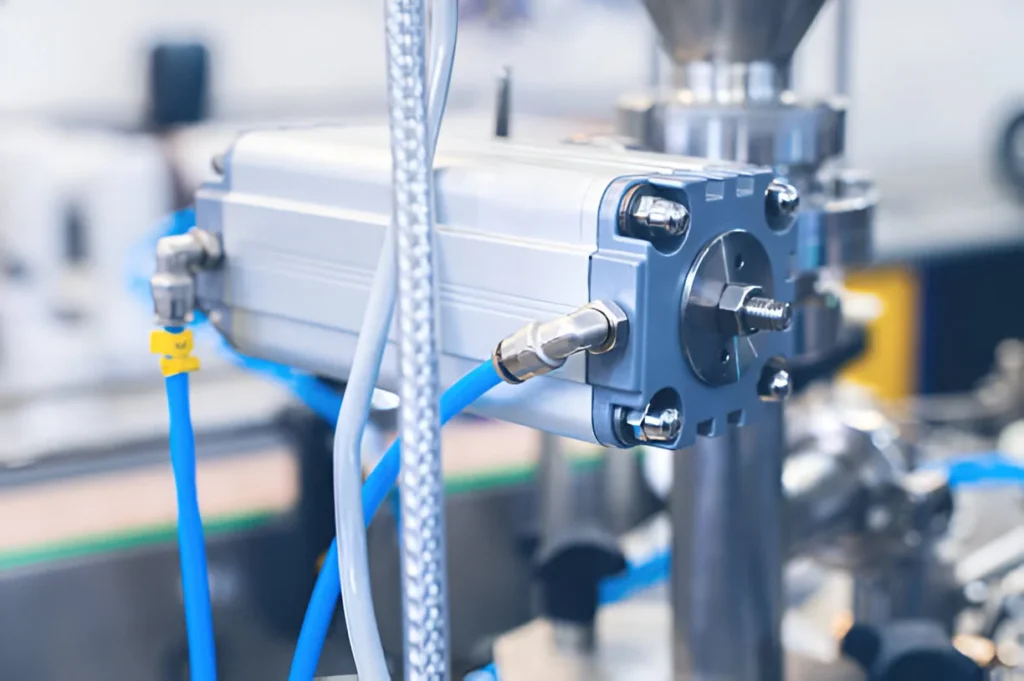
A compact air cylinders—sometimes called a short-stroke pneumatic cylinder—is a type of actuator that converts compressed air into linear motion. Unlike standard cylinders, it has a shorter stroke and a smaller overall body length, making it ideal for use in tight or confined spaces.
These cylinders rely on a piston mechanism driven by air pressure to move loads back and forth. The housing is typically made from aluminum or stainless steel, ensuring both durability and corrosion resistance.
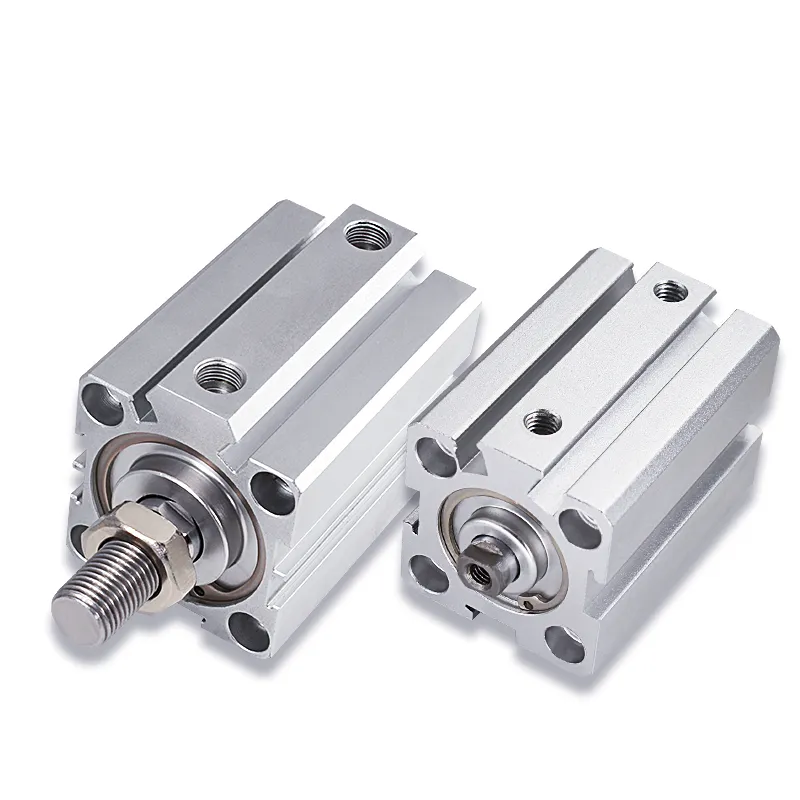
Common related terms include:
- Mini pneumatic cylinder
- Small air actuator
- Thin air cylinder
- Low-profile pneumatic cylinder
Key Specifications at a Glance
| Specification | Typical Range | Notes |
|---|---|---|
| Bore size | 6 mm – 100 mm | Smaller bores for precision equipment |
| Stroke length | 5 mm – 100 mm | Short compared to standard cylinders |
| Operating pressure | 1–9 bar | Compatible with most pneumatic systems |
| Body material | Aluminum, stainless steel | Corrosion resistance options available |
| Mounting type | Flange, foot, through-hole | Flexible installation |
| Cushion type | Fixed, air cushions | Smooth motion control |
When engineers need high force in limited space, compact air cylinders offer an unbeatable combination of power and efficiency.
Why Compact Air Cylinders Are a Game-Changer in Automation
1. Space Efficiency
Modern factories often contend with limited installation room. Compact air cylinders solve this challenge with short body lengths—often just one-third the size of standard cylinders of equivalent bore size. This allows machine designers to pack more function into every cubic centimeter of space.
2. Lightweight yet Powerful
Despite their smaller size, these cylinders can generate force comparable to larger actuators. Advances in pneumatic seal design and material precision ensure consistent output pressures without added bulk.
3. Cost and Maintenance Benefits
Compact air cylinders are cost-effective compared to electric actuators. They have fewer moving parts, minimal wear, and long service lifespans. Because they rely on air—not electricity or hydraulics—they are safer to maintain and operate, lowering the total cost of ownership for manufacturers.
4. Energy Efficiency Through Optimized Air Use
Certain models integrate dual piston designs or magnet sensors for feedback control, helping reduce air consumption and enabling smarter, controlled motion—an ideal fit for Industry 4.0 environments.
Common Applications of Compact Air Cylinders
Compact air cylinders play diverse roles across multiple industries. Their portability, adaptability, and high reliability make them suitable for tasks where short, frequent movements are required.
| Industry | Typical Use | Example Application |
|---|---|---|
| Electronics | Precision assembly | PCB placement and inspection systems |
| Packaging | Product transfer or sealing | Carton folding machines |
| Automotive | Component pressing | Door-lock or dashboard assembly lines |
| Robotics | Gripper actuation | End-of-arm tooling for small parts |
| Printing | Paper alignment | Printing press sheet guides |
Their compact footprint also makes them ideal for modular automation systems and mobile robotics, where every additional gram and millimeter matter.
Looking to upgrade your production line with space-saving components? Contact our technical team today for tailored compact air cylinder solutions.
Design Variations and Custom Options
Compact air cylinders come in multiple configurations tailored to specific environments. Understanding the differences helps engineers specify the right model for their system.
Single Acting vs. Double Acting
- Single Acting Cylinders use compressed air in one direction and a spring return in the opposite direction. Ideal for light load applications.
- Double Acting Cylinders use air pressure for both directions, offering stronger and more controlled linear motion.
Guided Compact Cylinders
For high-precision positioning, guided types integrate rods or linear bearings to prevent rotation and improve accuracy. These are popular in pick-and-place and clamping systems.
Magnetic Sensor Options
Modern compact cylinders often incorporate magnetic pistons that allow the use of external reed or Hall sensors. This enables digital position feedback—critical for automated production lines or feedback-controlled systems.
Materials and Seals
Depending on the operating environment, engineers may select:
- Stainless steel for high-humidity or washdown zones.
- High-temperature-resistant seals for challenging conditions.
- Lubrication-free types to reduce maintenance cycles.
| Cylinder Type | Key Feature | Best For |
|---|---|---|
| Compact guided | Anti-rotation | Precision automation |
| Magnetic sensor type | Real-time feedback | Smart systems |
| Stainless steel body | Corrosion resistance | Food or chemical plants |
| Dual piston type | Higher thrust | Heavy-duty cycles |
How to Select the Right Compact Air Cylinder
Choosing the correct cylinder requires careful evaluation of system requirements. Here’s a quick guide to the most important selection criteria:
- Bore Size and Stroke Length: Determine the required force output and available mounting space.
- Mounting Style: Compact air cylinders offer front flange, foot, or through-hole mounting for adaptability.
- Load Type: Consider vertical vs. horizontal mounting—gravity can affect motion stability.
- Operating Conditions: For high-moisture or dusty locations, go with stainless materials and special seals.
- Air Supply Characteristics: Ensure consistent pressure and filtration to maximize component life.
When in doubt, always consult with the manufacturer for sizing calculators or custom solutions. Experienced suppliers can provide model selection charts and CAD drawings to reduce design time.
Comparing Compact Air Cylinders vs. Standard Cylinders
| Feature | Compact Air Cylinder | Standard Pneumatic Cylinder |
|---|---|---|
| Stroke length | Short (<100 mm) | Long (100–1000 mm) |
| Body length | Short and lightweight | Larger and heavier |
| Space requirement | Minimal | High |
| Force output | Moderate to high | High |
| Maintenance | Low | Moderate |
| Ideal use | Small-space automation | General industrial machinery |
Compact cylinders shine where compactness and speed are more important than long-stroke capability. Their performance-to-size ratio is unmatched for light machinery, robotics, and integrated automation modules.
Benefits to OEMs and System Integrators
For machine builders and OEMs, every design decision affects both performance and profitability. Compact air cylinders offer tangible competitive advantages:
- Streamlined design: Integrate more functionality in less space.
- Faster assembly times: Simple mounting and alignment reduce build cycles.
- Improved aesthetics: Clean profiles enhance equipment appearance.
- Global availability: Many international brands and ISO-compliant models ensure ease of sourcing.
When integrated strategically, they can help reduce overall machine footprint—supporting lean manufacturing layouts and facilitating easier compliance with CE or ISO design standards.
Compact Air Cylinders in Industry 4.0 Systems
The next generation of manufacturing emphasizes connectivity and data-driven control. Sensors embedded within compact air cylinders allow for predictive maintenance, cycle counting, and real-time position monitoring.
For instance, magnet-sensor-equipped cylinders can transmit stroke position data to PLCs, helping optimize timing and improving precision. Combined with smart valves, these form a foundation for intelligent, energy-efficient pneumatic networks.
Compact air cylinders aren’t just mechanical components—they’re becoming smart actuators at the heart of connected factory systems.
Installation and Maintenance Tips
Even though these cylinders are engineered for reliability, proper installation ensures maximum lifetime and efficiency.
Best Practices
- Align accurately. Misalignment causes side loads and seal wear.
- Use regulated air supply. Maintain consistent pressure and dry air to avoid internal corrosion.
- Lubricate only when specified. Over-lubrication attracts dust and contaminants.
- Monitor stroke limits. Avoid overextending the piston to prevent early wear.
Routine inspection and correct air filtration can extend service life dramatically—often beyond 10 million cycles in controlled environments.
In the competitive world of industrial automation, compact air cylinders prove that size isn’t everything. By combining high performance, low cost, and flexible integration, they empower engineers to design smarter and more efficient machines—even in the tightest spaces.
From robotics to packaging, these cylinders represent the perfect balance between compact size and robust output. Whether you’re upgrading an existing system or designing from scratch, consider the compact cylinder as your next drive solution.
Need help choosing the right model or bulk ordering for OEM production? Contact our sales engineers today to discuss availability, technical drawings, and pricing options.
FAQ
What differentiates a compact air cylinder from a mini air cylinder?
Compact air cylinders handle higher loads with short strokes, while mini air cylinders are smaller in diameter, focusing on precision rather than force.
Can compact air cylinders be used in cleanroom environments?
Yes, stainless-steel and lubrication-free models are cleanroom compatible, ideal for electronics or medical equipment manufacturing.
How should I size a compact cylinder for my application?
Start with the required thrust: F=P×A (Pressure × Piston area). Factor in the load, mounting position, and friction.
Are custom strokes and mounting brackets available?
Manufacturers often provide custom stroke lengths and mounting adaptors upon request, ensuring full integration flexibility.
What’s the typical lead time for bulk orders?
Standard series are usually in stock, while custom versions may require 2–4 weeks. It’s best to request a quotation early—especially for large procurement cycles.