Understanding when and how to use a solenoid valve manual override is critical for plant safety, equipment maintenance, and emergency response in pneumatic automation systems. A manual override allows operators to directly control valve position without electrical signals, which is essential during power failures, system commissioning, troubleshooting or lockout/tagout procedures. This guide explains the types of solenoid valve manual override mechanisms, when they should be used, and best practices for integrating them into safe operating procedures that comply with industrial safety standards.
TABLE OF CONTENTS
- What Is a Solenoid Valve Manual Override?
- Purpose and Function
- When Manual Override Capability Is Required
- Types of Solenoid Valve Manual Override Mechanisms
- Push-Button and Knob Overrides
- Rotary and Lever Override Designs
- Safe Operating Procedures for Solenoid Valve Manual Override
- Emergency Shutdown and System Testing
- Maintenance and Commissioning Applications
- Lockout/Tagout Considerations for Manual Override Solenoid Valves
- OSHA Requirements and Plant Safety Policies
- Integrating Manual Override Into LOTO Procedures
- FAQ: Solenoid Valve Manual Override
What Is a Solenoid Valve Manual Override?
Purpose and Function
A solenoid valve manual override is a mechanical feature that allows an operator to directly change the valve’s internal position without energizing the electrical coil. In normal operation, a solenoid valve responds to electrical signals from a PLC, relay or control panel, and the internal plunger or spool moves when the coil creates a magnetic field. The manual override temporarily bypasses this electrical actuation by providing a direct mechanical linkage—typically a button, knob, lever or screw—that the operator can physically manipulate to shift the valve.
This capability is valuable in several scenarios: when electrical control systems fail, during initial machine setup and testing before wiring is complete, when troubleshooting valve or actuator behavior without full automation running, or during scheduled maintenance when certain portions of the pneumatic circuit must be isolated. By offering this mechanical control path, a solenoid valve manual override ensures that operators and technicians retain the ability to manage air flow and actuator states even when electronic controls are unavailable.
When Manual Override Capability Is Required
Not every pneumatic solenoid valve needs a manual override, but it becomes essential in critical safety systems, high-value processes, and applications where maintenance or emergency intervention must be possible at any time. Industries such as food and beverage processing, pharmaceutical manufacturing, oil and gas, and large-scale material handling often specify manual override as a mandatory feature to meet safety regulations and operational requirements.
Manual override is also important in systems where multiple actuators are controlled by one manifold of solenoid valves. During commissioning, technicians can individually test each pneumatic solenoid valve and cylinder without powering the entire control system, which speeds up startup and isolates faults more quickly. Similarly, during repair or preventive maintenance, operators can hold specific valves in known positions to safely depressurize lines, replace components or verify circuit integrity before returning the system to automatic mode.
Types of Solenoid Valve Manual Override Mechanisms
Push-Button and Knob Overrides
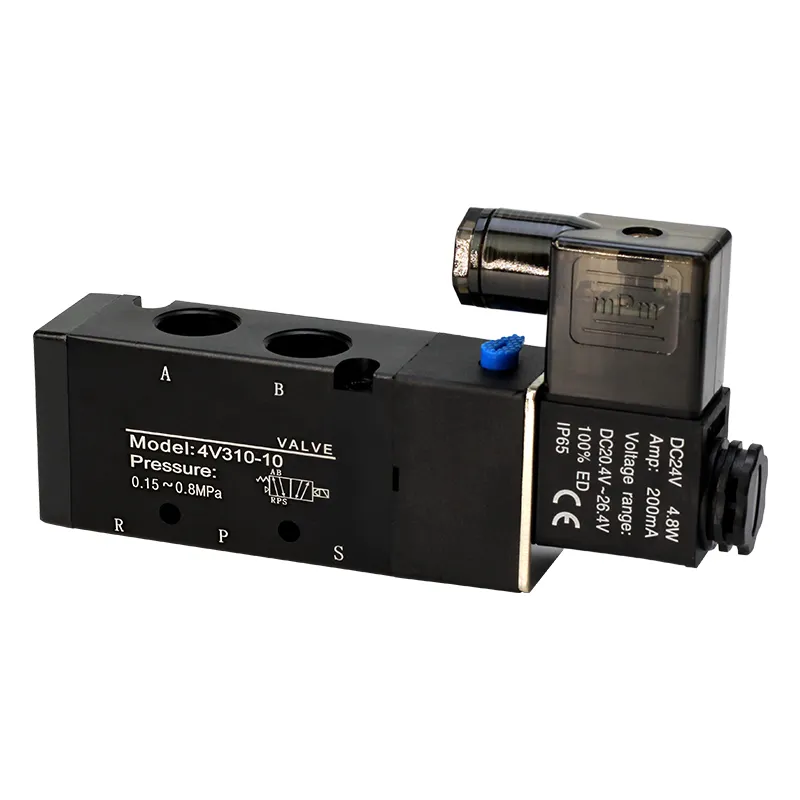
The most common solenoid valve manual override design for smaller pneumatic valves is a push-button or push-pin mechanism. A small button protrudes from the top or side of the valve body, and pressing it physically moves the internal spool or plunger into the actuated position. When released, a spring inside the valve returns the mechanism to its normal state. This type is often used on 3/2 or 2/2 direct-acting solenoid valves where the override only needs to hold the valve open briefly for testing or purging.
Knob-style overrides offer more control by allowing the operator to lock the valve in an overridden position. Rotating the knob a quarter turn or half turn may engage a mechanical detent or thread that holds the valve shifted without continuous manual pressure. This is useful during maintenance when a valve must stay open or closed for an extended period while technicians work on downstream equipment. Knob overrides are commonly seen on larger 5/2 and 5/3 valves used in industrial pneumatic actuator control circuits.
Rotary and Lever Override Designs
For pilot-operated or larger body solenoid valves, rotary handles and external lever overrides provide the mechanical advantage needed to shift internal components against higher pressures and larger flow areas. These designs typically feature a rotary knob or T-handle mounted on a shaft that directly connects to the spool or pilot assembly inside the valve. Turning the handle clockwise or counterclockwise moves the valve to one extreme position or the other, and some designs include a neutral or center position for 3-position valves.
Lever overrides, which may be mounted externally to the valve body, offer ergonomic benefits in tight spaces or when frequent manual operation is anticipated. The lever amplifies operator force and can be positioned for easy access even when valves are installed on crowded manifolds. Regardless of design, all solenoid valve manual override mechanisms should be clearly labeled with directional arrows, color coding or position indicators so that operators can confidently control valve state during time-sensitive situations.
Safe Operating Procedures for Solenoid Valve Manual Override
Emergency Shutdown and System Testing
One of the primary reasons to include solenoid valve manual override capability is to ensure that operators can quickly shut down or reconfigure a pneumatic system in emergencies, even if electrical power or control signals are lost. In an emergency stop scenario, technicians may need to manually vent specific cylinders, block air supply to hazardous zones, or shift valves to safe fail positions that cannot be reached by dead coils alone.
During system testing and validation, manual override allows engineers to simulate various valve states and observe how the pneumatic circuit and actuators respond before committing the logic to automated control. This step-by-step verification is especially important in complex multi-axis systems where a programming error could cause collisions, product damage or safety hazards. By manually overriding each valve in sequence, the commissioning team can confirm that piping connections, flow directions and cylinder mounting are all correct.
Maintenance and Commissioning Applications
Scheduled maintenance often requires isolation of individual valves or groups of actuators within a larger system. A solenoid valve manual override lets technicians hold a valve in a specific position while they replace filter elements, adjust regulators, inspect cylinders or perform leak checks without needing to keep electrical power on or simulate control signals. This capability reduces the risk of accidental actuation during hands-on work and speeds up maintenance cycles.
In commissioning and troubleshooting scenarios, manual override is invaluable for isolating problems. If a cylinder is not responding as expected, the technician can manually shift the solenoid valve to confirm whether the issue is electrical, pneumatic or mechanical. If the cylinder moves correctly under manual override but not under electrical control, the fault is narrowed to the wiring, PLC output, or coil. Conversely, if manual override also fails to produce motion, the problem likely lies in the pneumatic supply, the valve body, or the actuator itself.
Lockout/Tagout Considerations for Manual Override Solenoid Valves
OSHA Requirements and Plant Safety Policies
In the United States, OSHA Standard 29 CFR 1910.147 governs the control of hazardous energy, commonly known as Lockout/Tagout. This regulation requires that machines and equipment be properly shut off and energy sources isolated before maintenance or servicing, and that devices be applied to prevent unexpected startup. While OSHA LOTO standards primarily address electrical, mechanical and hydraulic energy, pneumatic systems—including solenoid valves—are also covered when they store or transmit energy that could cause injury.
When a pneumatic system includes solenoid valve manual override features, plant safety policies must define whether and how these overrides will be incorporated into LOTO procedures. Some facilities treat the manual override as part of the isolation sequence, requiring technicians to manually shift the valve to a safe position and then apply a lockout device to the override knob or handle to prevent inadvertent movement. Others may isolate the air supply upstream of the valves and lock out the main shutoff valves, treating the solenoid manual override as a secondary verification step rather than the primary isolation point.
Integrating Manual Override Into LOTO Procedures
To effectively integrate solenoid valve manual override mechanisms into LOTO routines, maintenance teams should:
- Identify critical isolation points:
Determine which solenoid valves control high-risk actuators or equipment, and specify whether each valve’s manual override must be locked in a safe position during servicing. - Use compatible lockout hardware:
Select or design lockout devices that physically prevent operation of knobs, levers or buttons on manual overrides. Some valve manufacturers offer dedicated lockout accessories, while others can be secured with universal clamps or covers. - Document procedures clearly:
Include step-by-step instructions in LOTO checklists that reference specific valve tags, locations and required override positions. Photographs or diagrams help less-experienced technicians follow procedures correctly. - Train all operators and maintenance staff:
Ensure that everyone who might interact with the pneumatic system understands the purpose of manual overrides, recognizes which valves are subject to LOTO, and knows how to verify safe isolation before beginning work. - Verify zero energy state:
After manually overriding and locking out valves, confirm that actuators do not hold residual pressure by checking gauges, bleeding lines or attempting to move cylinders by hand. This final check ensures that stored energy has been released and the work area is truly safe.
By treating solenoid valve manual override features as integral parts of energy control programs, facilities can reduce the risk of accidental actuation, protect personnel from unexpected motion or pressure release, and comply with both regulatory requirements and industry best practices.
FAQ: Solenoid Valve Manual Override
Q1: Can I use the manual override while the solenoid coil is energized?
Most valve designs allow manual override to function even when the coil is powered, and the mechanical override will typically dominate. However, it is generally safer and clearer to de-energize the coil before using manual override, especially during maintenance or troubleshooting, to avoid confusion about which control method is active.
Q2: Will frequent use of the manual override damage the solenoid valve?
Manual override mechanisms are designed for intermittent use during setup, testing and emergencies. Frequent or aggressive operation, especially on pilot-operated valves, can cause accelerated wear on internal seals and mechanical linkages. For applications requiring regular manual cycling, consider dedicated manually operated valves or ensure that the override design is rated for high-cycle duty.
Q3: How do I know if a solenoid valve has a manual override feature?
Check the valve datasheet, model number suffix codes or physical inspection of the valve body. Manual override typically appears as a visible button, knob or lever on the top or side of the valve. If ordering new valves, specify manual override as an option since it is not always included in the base model.
Q4: Are manual overrides suitable for use in automated production lines?
Manual overrides are primarily intended for non-routine situations such as commissioning, troubleshooting and emergency intervention. In normal automated operation, valves should be controlled electrically. However, having manual override available on critical valves in production lines provides a valuable safety and diagnostic tool without interfering with automated sequences.
Q5: What should I do if the manual override is stuck or difficult to operate?
A stiff or stuck manual override may indicate contamination, corrosion or wear inside the valve body. Do not force it, as this can cause further damage. Instead, isolate the valve, verify that supply pressure is within normal range, and inspect or disassemble the valve following manufacturer guidelines. Cleaning, lubrication or seal replacement may be needed to restore smooth manual override operation.
Related Pneumatic Products from cnzzjyt.com
- Pneumatic Solenoid Valve Product Overview
- 3V Series 3/2 Solenoid Valve 100
- 4V Series Reversing Solenoid Valve 100
- 4V Series Reversing Solenoid Valve 200
- SY Series Compact Reversing Solenoid Valve
- Standard Pneumatic Cylinder Category
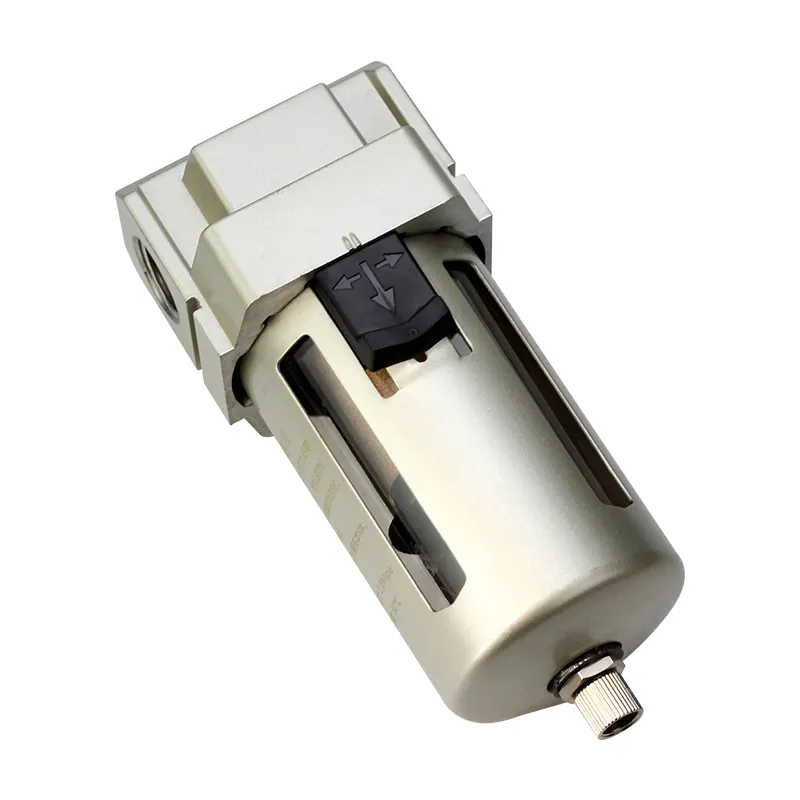
- AF-BF Series Air Filter for Clean Supply Air
- AR-BR Series Air Regulator for Stable Pressure